In this guide
A job description is doing several jobs at once. It introduces the work, states qualifications, describes employment conditions, and tells candidates how to apply. Reading it only for familiar words can blur these layers together. A more useful approach is to separate them before you decide whether to spend time preparing an application.
Use the five-layer review below with an actual current posting. Keep a clean copy of the text and make notes beside it in a separate document. Your annotations are a research aid, not an alternative version of the employer’s requirements. When language is ambiguous, preserve the exact wording in your private notes and frame a narrow question for the hiring contact.
Layer one: the work people depend on
Find the verbs attached to recurring duties. A role might coordinate, inspect, explain, maintain, analyze, document, or supervise. Beside each verb, identify its object and recipient. Coordinating what? Explaining which process? Maintaining which asset? This produces a more realistic picture than a title such as coordinator or specialist, which can cover very different responsibilities.
Next, distinguish a visible outcome from the routine work that produces it. A public event may depend on schedules, clear instructions, vendor communication, and follow-up records. A report may depend on careful definitions, source checks, and revisions. Your task is not to imagine every detail of the job. It is to identify the work you would need to discuss credibly and the details the posting leaves open.
Layer two: stated entry requirements
Read qualifications slowly, including any wording about experience, education, licenses, or combinations of preparation. Do not silently turn a preferred qualification into a mandatory one. Equally, do not assume a requirement can be replaced by enthusiasm or a self-directed course. If the posting describes an equivalency, interpret only what it actually says and ask the employer about any material uncertainty.
Build a simple requirement ledger. Give each criterion one of three labels: supported by a record, needs clarification, or not currently supported. The label is for your planning, not an official eligibility finding. Add the evidence beside it. A date range, certificate title, or specific example is more useful than writing yes because the overall role sounds familiar.
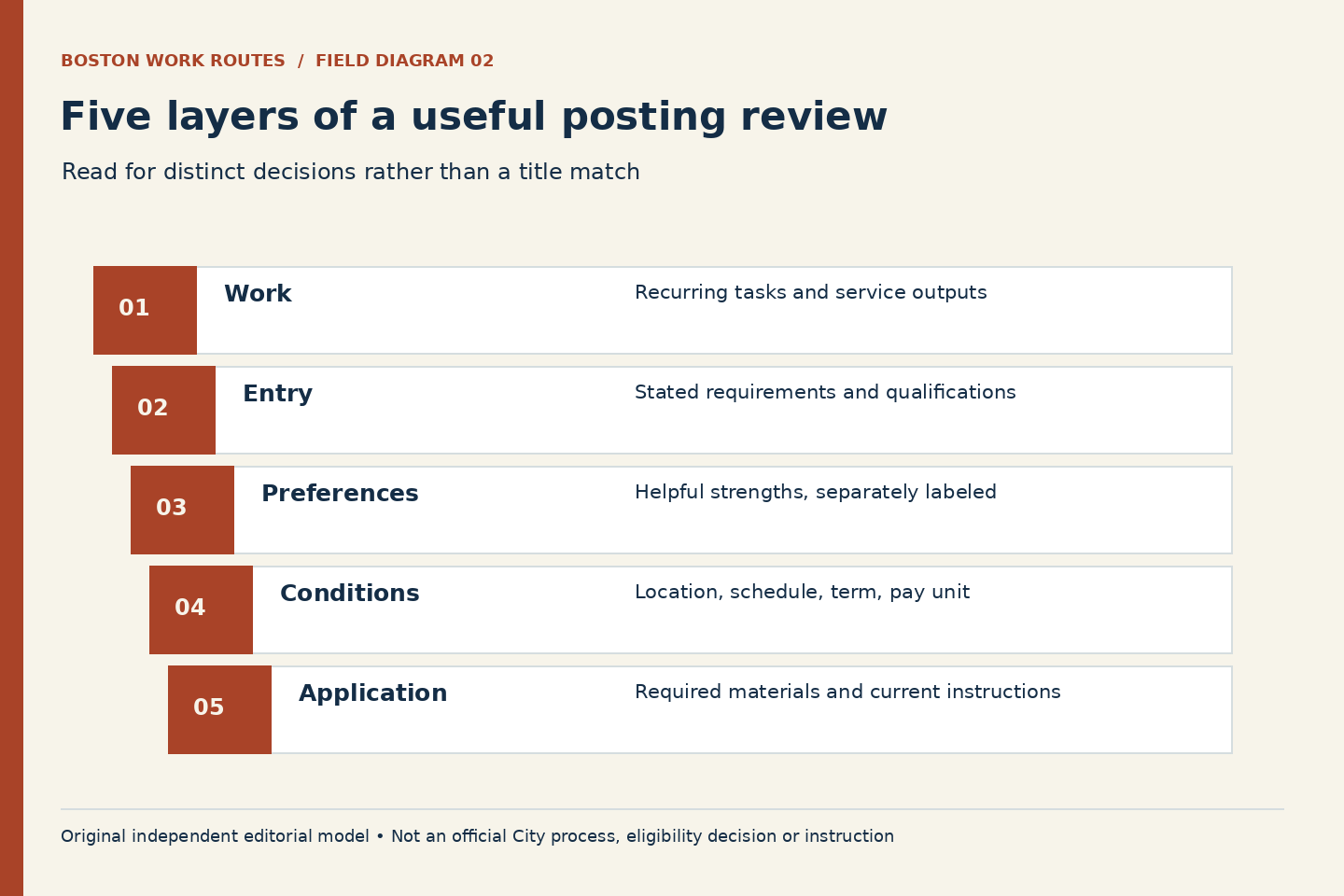
Layer three: strengths beyond the minimum
Preferences help you understand what the team may value, but they are not a reason to invent experience. Ask which of your real examples demonstrates the underlying work. If a posting values coordination, an example should show how you managed dependencies or kept people informed. Saying you are organized adds little unless the reader can see what that meant in practice.
A hypothetical candidate might have maintained a small nonprofit’s event calendar but never managed a municipal program. They could describe the calendar work accurately, including the number of events only if they can support it. They should not rename that experience municipal program management. The skills evidence inventory helps keep transferable experience specific without inflating its scope.
Layer four: working conditions and pay language
Collect practical conditions in a separate section: work location, schedule, hours, employment term, travel, physical tasks, and any other terms the posting states. Leave blanks visible. Silence about remote work is not confirmation of a remote arrangement; a broad department description is not necessarily the schedule of this vacancy. Ask about facts that would materially affect your decision before treating them as settled.
The City’s salary information page, checked October 2, 2026, explains salary plans, grades, and steps, with many plans connected to collective bargaining agreements. Preserve the pay unit and any plan code exactly as shown. A published range does not establish your starting placement, future earnings, or take-home amount. Direct appointment-specific questions to the hiring employer.
Layer five: the application itself
Now read the application instructions as their own checklist. Identify required documents, specific prompts, screening questions, permitted formats, and any stated closing information. An excellent resume does not answer a separate question merely because similar information appears somewhere inside it. Make sure each requested item is addressed where the current application asks for it.
Boston’s application guide distinguishes saving work from submitting it. Some interface details on that older guide differ from the current Career Center route, so use the live posting and form for operational steps. Treat successful file upload, completed form fields, and confirmed submission as separate checkpoints rather than interchangeable signs that you are finished.
Turn unclear language into answerable questions
Avoid asking the hiring contact to interpret your entire career history. Point to the specific criterion, briefly describe the relevant fact, and ask what you need to know. For example, a hypothetical question might ask whether a listed training requirement must be completed at application or before starting. The employer’s answer, rather than an informal online guess, should guide the next action.
- Does every required criterion have a truthful supporting record or an open question?
- Can you describe the recurring work without copying the title?
- Are the conditions that matter to you stated, or still unknown?
- Have you kept preferences separate from requirements?
- Do you know what the current application asks you to submit?
Finish with a short decision note: apply now, clarify first, or prepare for a different opportunity. Explain the reason in one or two sentences. Use the two-role comparison method if another posting competes for your time. This review should make a decision clearer, not create a false certainty that you will be selected. A careful application begins with an honest reading of what the employer actually wrote.
Related reading: Build a Skills Evidence Inventory Before You Apply, Compare Two Municipal Roles Without Inventing a Winner.