In this guide
Career preparation can become an endless collection of courses. A shorter learning cycle is often easier to evaluate: choose one kind of work, practice a few relevant tasks, and inspect what you can do at the end. Six weeks provides a planning frame, not a promise of qualification.
Boston’s Career Center, checked October 2, 2026, links to several career pathways and early-career opportunities. Use current official requirements to guide research. This self-directed plan does not replace a license, credential, examination, required experience, or an employer’s assessment.
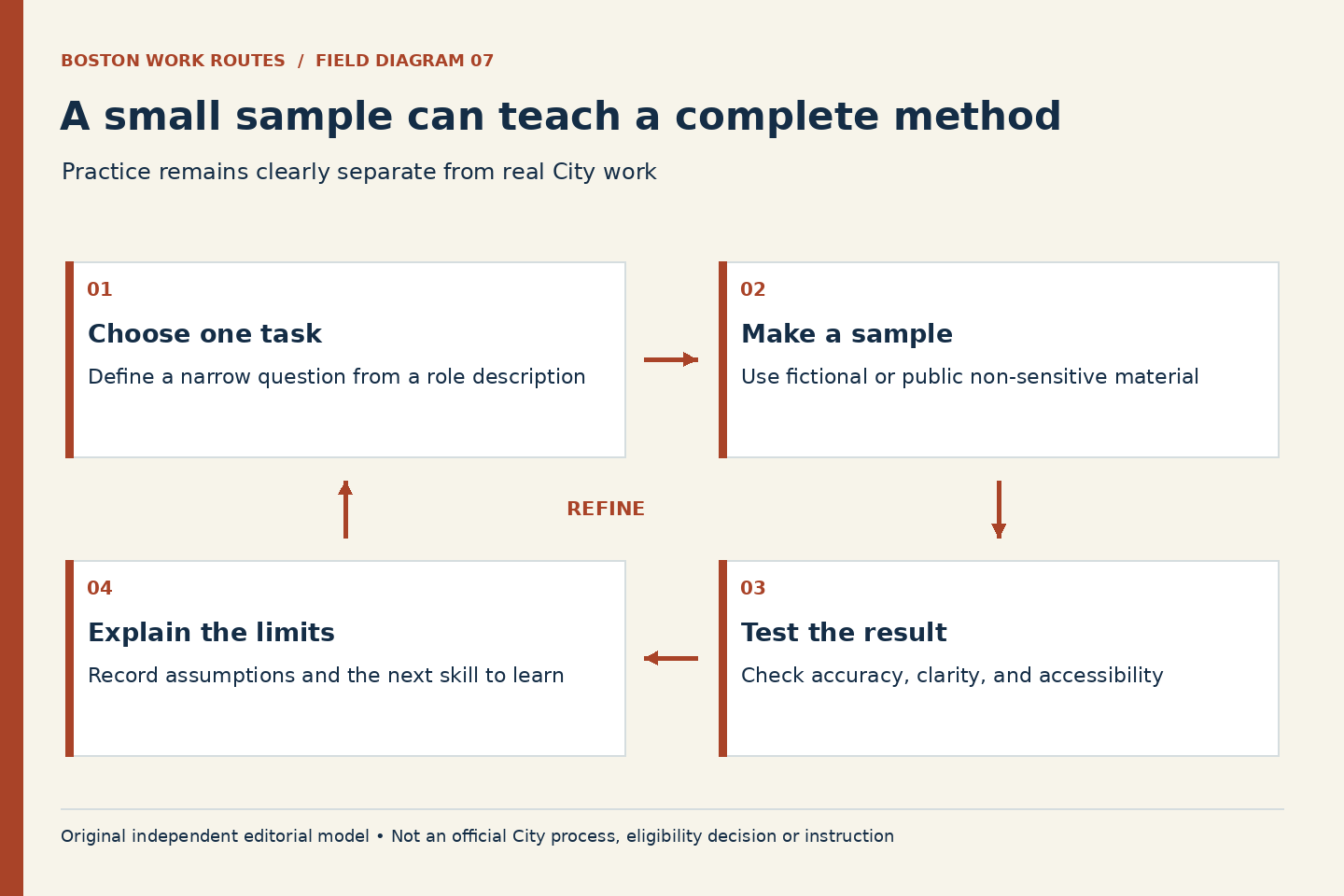
Week one: define the target task
Select one role family rather than municipal work in general. Read two or three relevant descriptions and note the recurring tasks. Choose a task you can safely practice without access to internal systems, real residents’ records, or specialized equipment you are not trained to use.
Write a narrow learning question. For example, how can I check a small dataset for inconsistent entries and explain the corrections? Record your starting ability by attempting a short exercise. Save the result privately; it will provide a more useful comparison later than your memory of how difficult the task felt.
Week two: study a method
Find a reputable introductory resource matched to the chosen task. Prefer a resource with worked examples and exercises over one that only describes concepts. Set a manageable schedule, such as two focused sessions and one review session, adjusted to your available time.
Keep a question log. Mark unfamiliar vocabulary, steps you cannot explain, and assumptions the resource makes. Do not buy a course simply because it advertises career results. Check cost, prerequisites, accessibility, and relevance before committing time or money.
Week three: make a small practice artifact
Create something concrete: a mock scheduling checklist, a plain-language service explanation, or an analysis of a non-sensitive practice dataset. Label it self-directed practice. State who the imagined reader is and what the artifact is intended to help them do.
Hypothetical example: a learner creates a fictional equipment checkout log and tests how missing dates affect the handoff. They use invented records and explain the limitations. The exercise demonstrates learning about record quality; it does not become experience administering a real municipal inventory.
Week four: test and revise
Ask someone appropriate to try using the artifact or review it against a checklist. Give them a specific question, such as whether they can find the next action without explanation. If no reviewer is available, leave the work for a day and test it from the intended reader’s perspective.
Keep a short revision record: what failed, what changed, and why. Avoid collecting unnecessary personal data during testing. One carefully documented improvement can reveal more about your learning process than several unfinished projects.
Week five: explain your choices
Prepare a two-minute explanation of the problem, your method, the checks you performed, and the limitations. Use the interview story framework while keeping the practice label clear. If you cannot explain a tool-generated result, return to the method before presenting it as your capability.
Week six: assess and choose a next step
- Repeat the starting exercise or a comparable task.
- Compare accuracy, clarity, and independence rather than speed alone.
- Identify one improvement and one remaining limitation.
- Review the target role’s current requirements again.
- Decide whether to apply, continue learning, or explore a different role family.
Add the work to your evidence inventory as practice. Keep any certificate separate from the skills it actually tested. A successful cycle ends with a clearer understanding of your readiness and interests, even if the most useful conclusion is that this work is not the direction you want.
Related reading: Prepare Public-Service Interview Stories With Clear Boundaries, Build a Skills Evidence Inventory Before You Apply.