In this guide
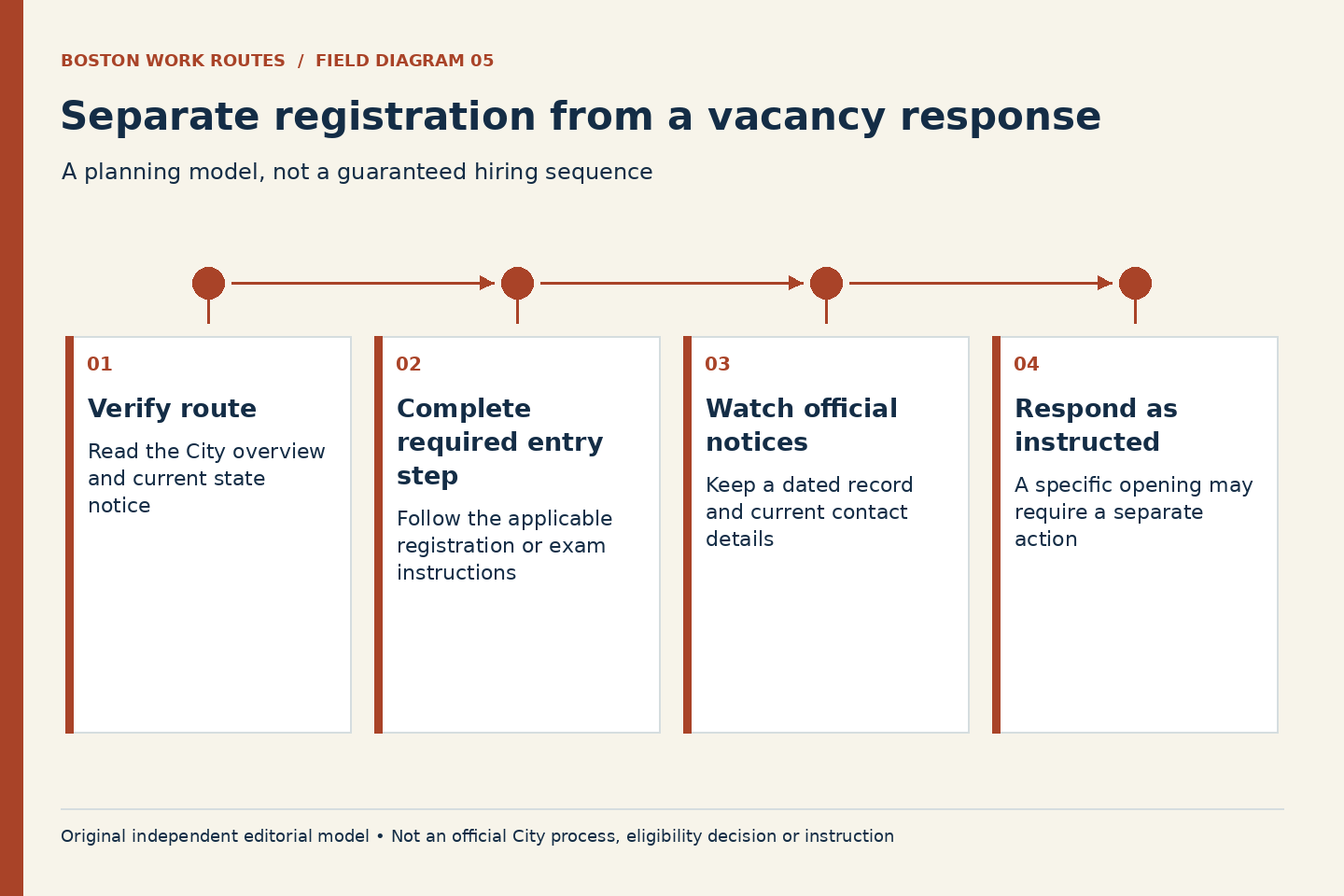
Registration, an examination, a place on a list, and a response to a particular opening are different events. Confusing them can lead a candidate to believe an application is complete when another action is required. For a role using a state-linked route, the most useful preparation tool is a dated notice log rather than a general checklist copied from another occupation.
Boston’s civil and labor service overview, checked October 2, 2026, describes state-first steps for specified police, fire, and labor-service positions. It identifies written and physical examinations for sworn police and fire routes. Its labor-service section includes trades, maintenance, and driving work, and emphasizes responding to a notice for a particular opening. Follow the current official material for the exact role; these categories do not describe every City vacancy.
First, verify which process applies
Begin with the title and employer on the announcement you are actually considering. Find the pathway identified by that source and follow its official state link when relevant. Do not choose a route solely because the work sounds physical, public-facing, or similar to a friend’s occupation. Job families and hiring classifications are not interchangeable.
Write a short route statement: this announcement directs me to this official process, and the next documented step is this action. If you cannot fill that sentence from a current source, pause and ask the identified hiring contact. Our municipal career map can help you organize that first question without treating uncertainty as a reason to abandon the search.
Make a notice log
Use one row per official notice or completed action. Record its source, issue or receipt date, the role involved, what it asks you to do, and any stated response deadline. Keep confirmations privately. A date in your log should come from an actual notice or your own completed action, not from an online estimate of how long hiring usually takes.
- Route source: the current page that explains the applicable process
- Entry action: the registration or examination step required in that process
- Confirmation: what the official system actually acknowledged
- Opening notice: a later communication about a specific opportunity
- Response: what you submitted, when, and through which instructed channel
This separation gives you a factual answer when you wonder what is still pending. It also makes errors easier to spot. If a row contains a deadline but no source, return to the notice. If it contains an expected result but no actual confirmation, label it pending rather than completed.
Treat status as information, not a forecast
Do not translate a list position, invitation, or generic status into a probability of being hired. The City’s overview discusses ranking and selection rules, but applying those rules to an individual case can involve details a general article cannot establish. Seek procedural clarification from the responsible official source instead of using an independent planner as a legal interpretation or selection calculator.
A hypothetical candidate could have completed an initial registration and still need to respond when contacted about an opening. The useful behavior is to preserve the notice and follow its instructions. Repeatedly submitting unrelated applications or sending additional personal documents to an unverified address would not resolve the uncertainty about that particular notice.
Prepare what remains within your control
Keep contact details current in the official system through its authorized process. Review role-specific requirements, maintain truthful experience notes, and check messages associated with the application. Use the private application tracking method to record observable events without inventing an outcome. When an official notice arrives, reread it in full even if you have encountered a similar stage before.
Your stopping point for each review is concrete: you know the next instructed action, its source, and whether you have completed it. The broader hiring process may still be open. A well-kept log cannot accelerate selection or guarantee an appointment, but it can help you avoid overlooking a step that the process actually asks you to take.
Related reading: A Practical Map of Boston Municipal Career Routes, Track Applications Without Guessing What the Status Means.